Concrete Foundations & Footings
The structural support your building depends on, built to handle Newton's challenging soil and weather conditions.
Why Foundation Quality Matters
Your foundation carries the entire weight of your structure and transfers it safely to the ground. When foundations fail, you get cracked walls, stuck doors, sloped floors, and expensive repairs. That's why proper foundation work is the most critical investment in any building project.
Newton's soil conditions and weather make foundation work especially challenging. Clay soils expand when wet and shrink when dry, creating movement. Freeze-thaw cycles can push and lift improperly designed footings. And our water table fluctuates seasonally. We account for all these factors when designing and installing foundations so your structure stays stable for its lifetime.
Foundation Types We Install
Different structures require different foundation systems. Here's what we commonly build:
- •Strip footings: Continuous concrete footings under load-bearing walls, standard for most additions and small structures
- •Pad footings: Individual concrete pads under posts or columns, used for decks, pergolas, and post-and-beam structures
- •Slab-on-grade: Combined floor and foundation system, common for garages and single-story additions
- •Frost walls: Full-depth foundation walls that extend below frost line to prevent heaving
- •Garage foundations: Specialized systems designed for vehicle weight and door openings
We evaluate your project, soil conditions, and local building codes to recommend the right foundation system. The goal is building adequate support without over-engineering, giving you a safe structure at a fair price.
Our Foundation Installation Process
Foundation work follows strict procedures that can't be skipped. We start with accurate layout and excavation to proper depth. In Newton, footings must extend below the frost line (typically 48 inches) to prevent frost heaving. Shallower footings will lift and crack your foundation when ground freezes.
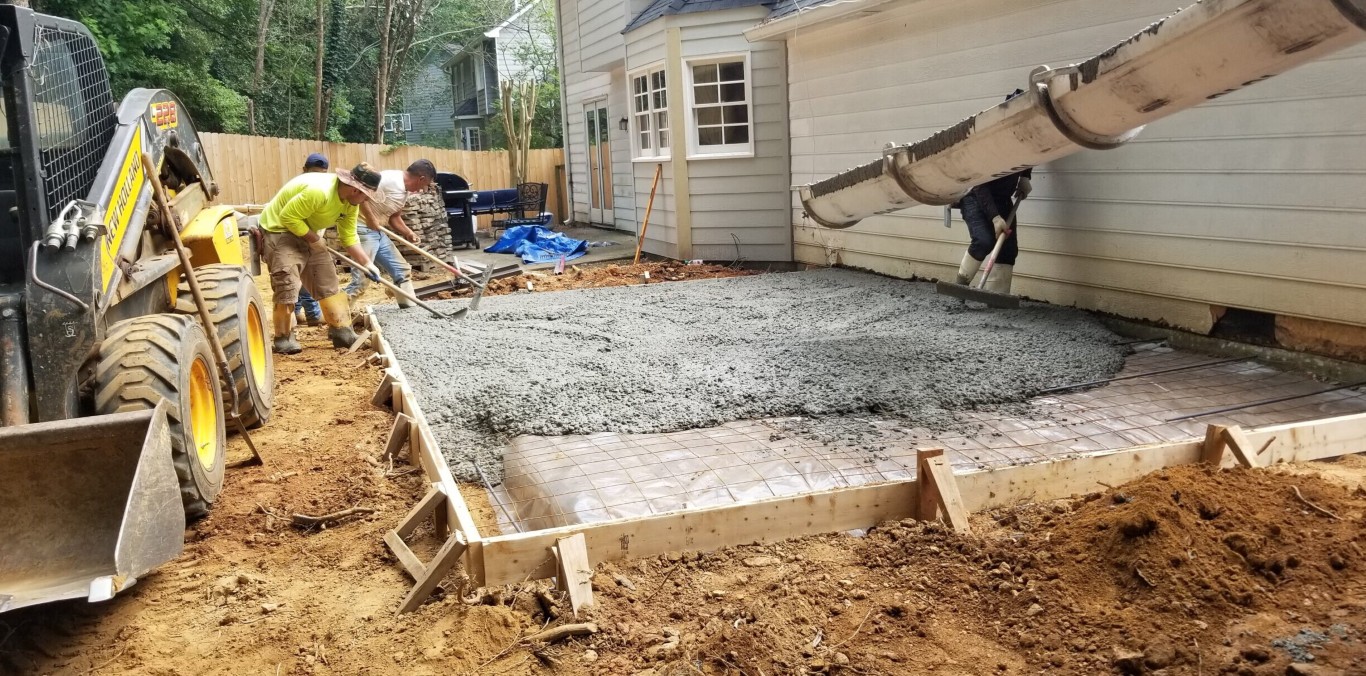
After excavation, we prepare the base, often adding crushed stone for drainage and stability. Then we build forms to the exact dimensions and elevations your structure requires. Steel reinforcement gets placed according to engineering specifications. We inspect everything before concrete arrives.
The concrete pour itself needs careful execution. We use the right mix design for structural concrete, ensure proper consolidation to eliminate air pockets, and finish surfaces as required. For walls, this often means smooth finishes for waterproofing application. For footings, a rough finish provides better bonding with walls above. Similar attention to detail goes into all our concrete projects.
Meeting Building Codes and Engineering Requirements
Foundation work in Newton requires permits and inspections. Building inspectors verify that excavation depth, reinforcement placement, and concrete quality meet code before you can proceed. We schedule inspections at appropriate stages and ensure our work passes the first time.
Many projects also require engineering stamps on foundation plans. We work with your engineer or can recommend qualified professionals who understand local soil conditions. Engineered foundations give you confidence that the structural design is adequate and compliant. They also protect you during the permitting process and future property transactions. While this adds upfront cost, it's money well spent for the foundation literally supporting your investment.
Planning a Building Project?
Let's discuss your foundation needs. We'll help you understand what's required and provide accurate estimates.
Call (617) 862-3423